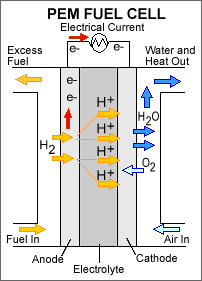
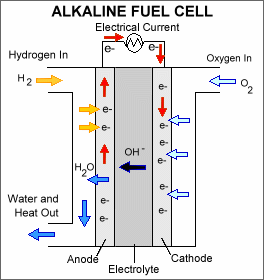
 An alkaline fuel cell works with a catalyst breaking down your water or something like methanol to produce hydroxide anions (H2O minus the H) which cross the fuel cell membrane instead. This produces several notable advantages over proton fuel cells and if you were at the poster presentation my group gave, you probably saw me and my molecular models explain some of it. One of the main problems with fuel cells is how do you store the fuel (safely, efficiently) and how do you establish an infrastructure to disperse that fuel? Some fuels are easier to accomplish this with than others and some of those fuels only work with a proton or alkaline fuel cell, and vice versa. Different fuel cell types, and there are more than just these two, have numerous pros and cons.
Some things I learned at UMass:
-There are crazy ground bees in the woods when you go hiking.
-I'm not allergic to crazy ground bees.
-Flash chromatography. Pushing down on the valve slightly will turn a three-hour process into a one-hour one.
-Kinetics via NMR. I can run a sample and process the read-out much faster now. I'm also paranoid of hydrogen-deuterium exchange.
-How to set up a poster for a presentation.
-Always inquire about a meal plan before you arrive at your REU site. Don't preorder until you've scoped out the situation there. University dining in the summer isn't out to do anyone any favors.
-I can survive on Easy-Mac and Beefaroni for a summer (there were chips and cookies to go along with it, had a whole system down).
-I got to experience what a college town is really like. Massachusetts has a lot of good college towns. The situation with UConn is the inverse, where the campus is the only observable form of society around.


No comments:
Post a Comment